+86-183-0595-5596 sales@youfahardware.com
Ceritified
ISO9001: 2016
Reputation
Client approval
The Best
Global supply
Get A Quote

Torsion Springs

Torsion springs

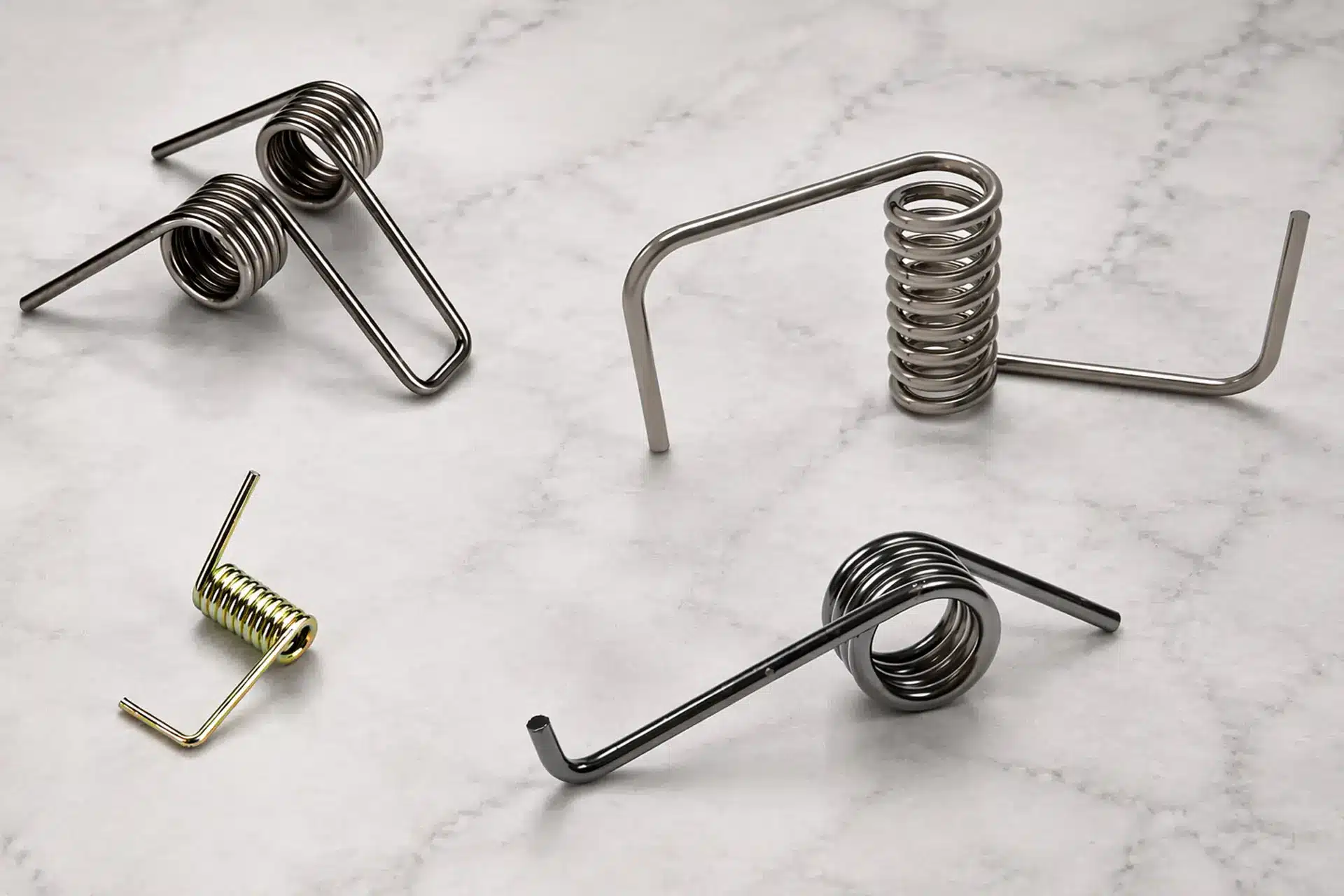
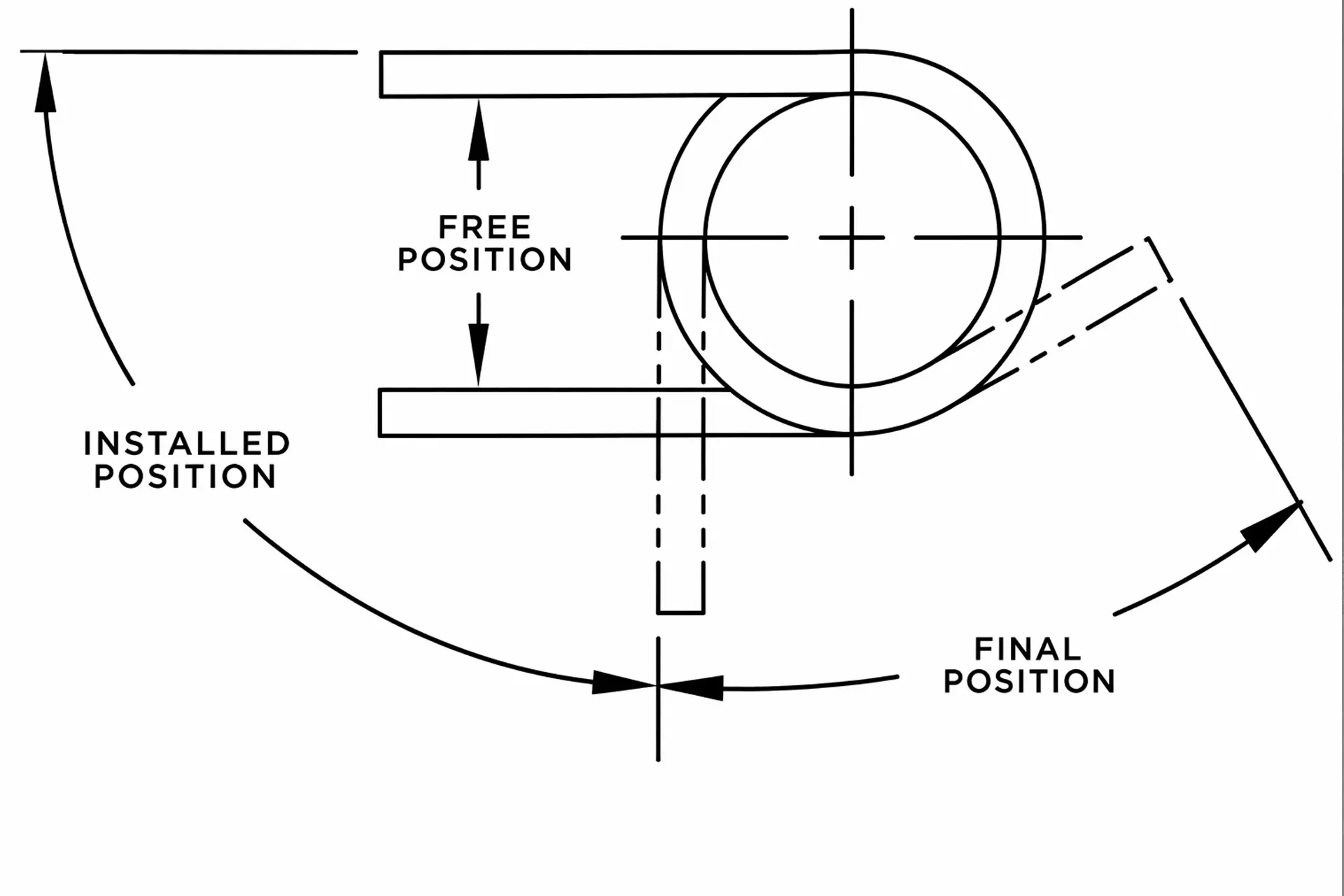
Torsion springs are helical components engineered to exert torque or store angular energy through rotational deflection. Unlike compression springs, a torsion spring functions by being twisted about its axis. As torque is applied, the spring undergoes a characteristic reduction in body diameter and a simultaneous increase in body length—factors that are critical for proper housing and arbor design.
Critical Design Parameters

To ensure mechanical integrity and prevent premature failure, the following engineering specifications must be defined:

  • Wire Diameter : The gauge of the wire material used in the coil.
  • Outer/Inner Diameter : The dimensions in the unloaded state. Note: Since the ID contracts during deflection, the mounting shaft (arbor) must be sized smaller than the minimum ID at maximum torque to prevent binding and frictional interference.
  • Total Coils: The total number of revolutions in the spring body.
  • Wind Direction: Specified as Left-Hand (LH) or Right-Hand (RH). For optimal performance, torsion springs must always be deflected in the direction of the wind (tightening the coil). Deflecting against the wind direction can cause permanent deformation or catastrophic failure.
  • Leg Configurations: Specialized extensions at each end used for anchoring and torque transmission. Common geometries include straight, hooked, offset, and complex custom bends.

Industry Applications

Torsion springs are essential in mechanisms requiring controlled rotational return forces:

  • Industrial & Building: Heavy-duty garage door counterbalances and self-closing hinge systems.
  • Automotive Systems: Trunk and hood hinges, clutch/brake pedals, and seat adjustment mechanisms.
  • Precision Electronics: CD/DVD tray ejectors, flip-up covers, and handheld device hinges.
  • Commercial Hardware: Industrial clipboards, high-tension clamps, and heavy-duty waste bins.

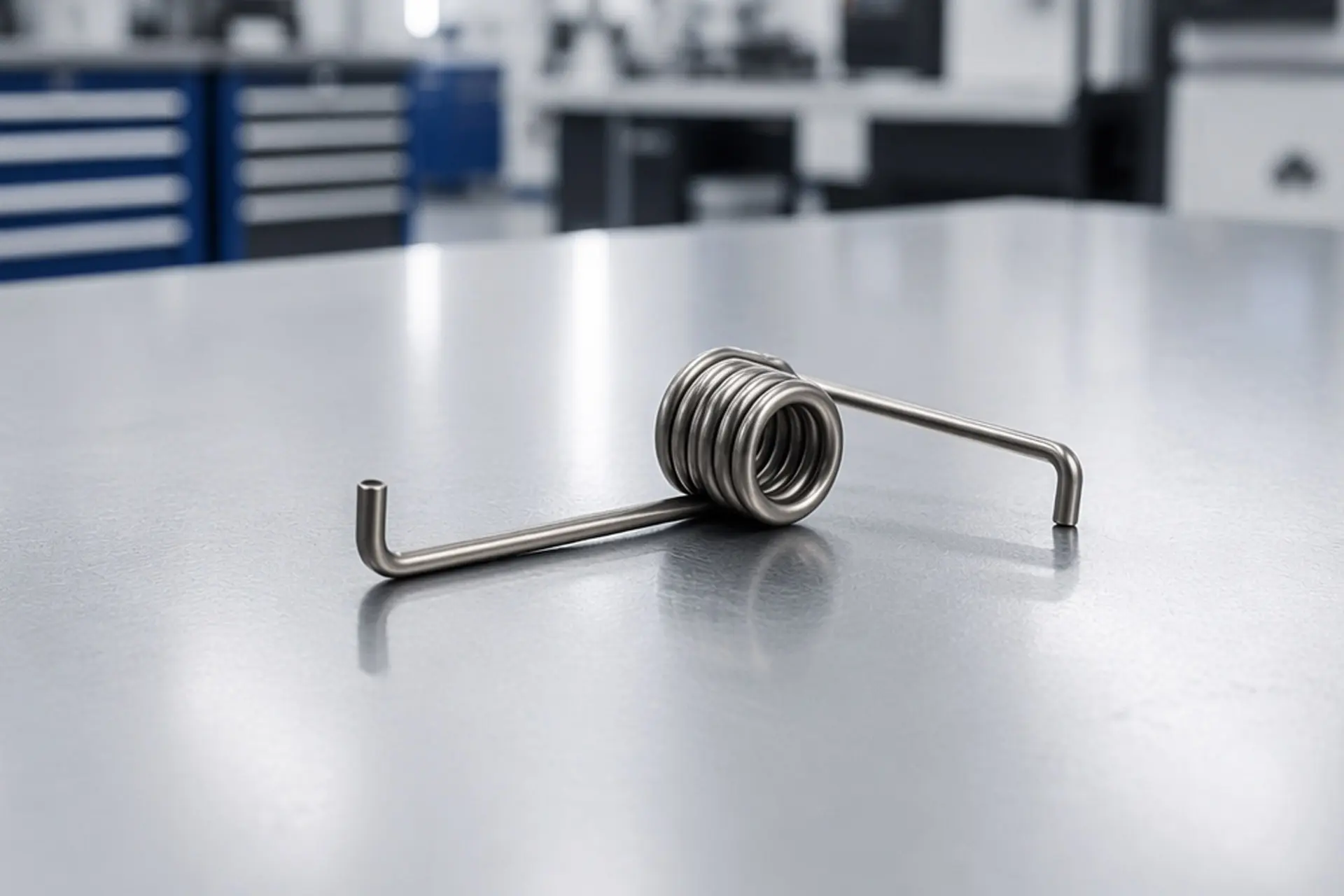
The most common design for a torsion spring is the cylindrical wound design, which consists of a coiled metal wire, in a left- or right-hand, clockwise or anti-clockwise direction and usually has legs, to which a force can be applied.
Torsional springs hold two mechanisms together and their tightness is proportional to the energy stored inside of it. Tension must be removed in order for the spring to release this stored energy.